
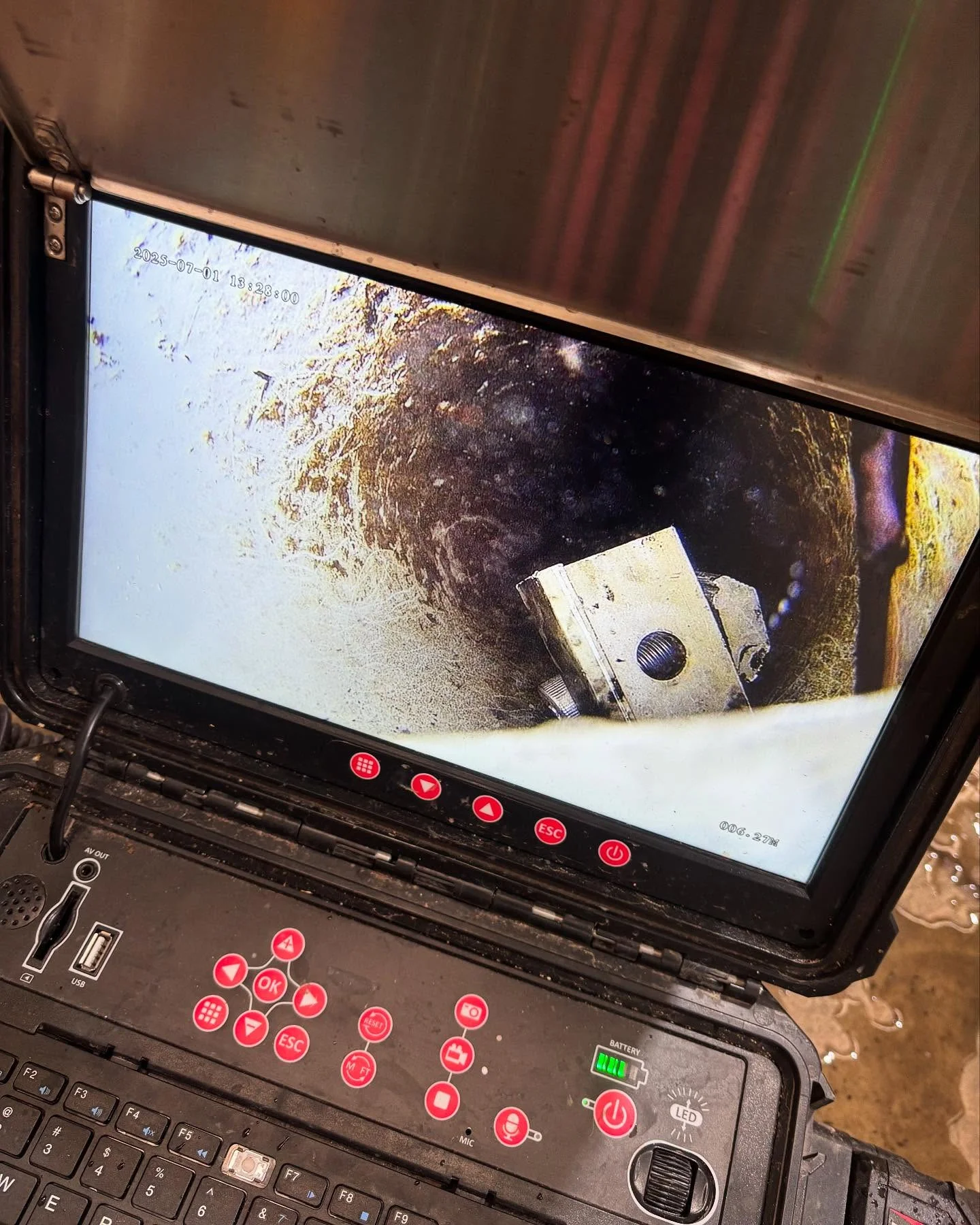
A drain camera shows the inside of the pipe section it can reach. It may reveal visible roots, a blockage, deposits, a damaged joint or a change in pipe shape. It cannot confirm areas the camera did not reach, and obstructions or water can limit what the inspection shows.
What might appear on camera?
The view may show a restriction, material on the pipe wall, root entry, a displaced or damaged section, or a low point where debris collects. A camera is useful evidence for the inspected area, but the cause of a problem should be based on what is actually visible.
What does the camera not prove?
The inspection only covers the path the camera can travel. A bend, standing water, an uncleared obstruction or poor access can stop it early. If a location device is used, it can help estimate where a visible point lies from the surface; confirm which sections were inspected and any limits.
What should the explanation include?
Ask the plumber to identify the line and section inspected, describe what is visible and explain what remains uncertain. If footage can be saved or shared, confirm that before booking. A repair recommendation should connect to an observed issue and its location.
When should you call a plumber?
- Blockages return and the underlying cause is unclear.
- Several fixtures are affected or drainage has changed.
- A repair or excavation is being considered and the fault needs locating.
- You want to understand what a recent inspection did and did not establish.
What affects the cost?
Cost can depend on access, how much of the line can be inspected, whether the blockage must first be cleared, whether locating or saved footage is included, and whether any repair is quoted separately. Confirm the inspection scope and any additional charges before booking.